Quick answer: A strong biker dating profile states the relationship you want, explains how motorcycles fit into your real life, uses clear and varied recent photos, includes interests beyond riding, and gives people specific reasons to start a conversation.
Start with intention, respect, and ordinary judgement
Motorcycle culture gives two people an immediate subject, but it does not replace the normal work of dating. Be clear about the relationship you want, notice whether communication is mutual, and protect private information while trust develops. Treat every profile as an introduction rather than proof of identity, compatibility, or character.
The most useful approach is specific and calm. Ask questions based on what the person has chosen to share, answer with similar openness, and move towards a public meeting only when details remain consistent. A shared interest should make conversation easier, not create pressure to move faster than either person wants.
What should the first lines of your profile do?
The opening should tell readers who you are now and what kind of connection you hope to build. Clarity saves both people from guessing whether the profile is about dates, a relationship, companionship, or only riding partners.
Combine relationship intent with one distinctive detail: a favourite kind of weekend, a current project, a place you enjoy, or a value that shapes your life. Write in your normal speaking voice.
Avoid empty claims such as being easy-going, loving adventure, or having no drama unless you provide an example. Specific detail is easier to trust and easier to answer.
How much motorcycle detail belongs in the bio?
Enough detail should show what riding means and how often it appears in your life, but the profile does not need to read like an equipment inventory.
Mention your current riding style, a meaningful route or memory, and whether you hope a partner will ride, join as a passenger, or simply respect the interest. Keep technical lists for later conversation.
Do not exaggerate experience, speed, travel, club status, or ownership. Accuracy builds stronger conversations and prevents an awkward correction after someone becomes interested.
Which profile photos work best?
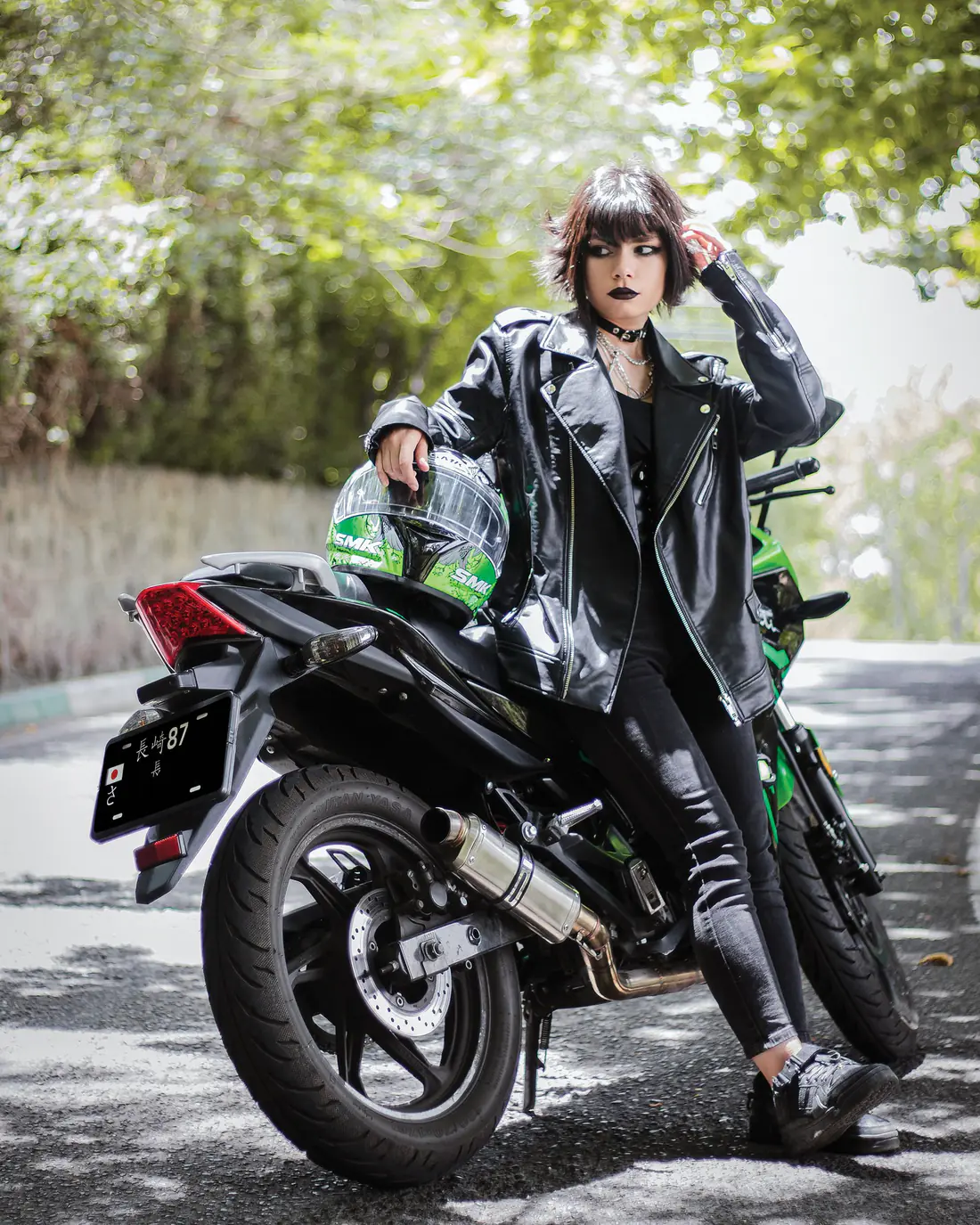
Use a clear recent photograph of your face, a full-length image, an everyday-life picture, and a motorcycle image if it reflects your current interests.
Choose photographs with good light and enough space to see you. A helmet image can add context, but it should not be the only view of your face. Ask a trusted friend whether the set looks current and approachable.
Remove visible addresses, licence documents, work badges, children's identifying details, and predictable route information. Do not use another person's image without permission.
Why include interests beyond riding?
People need to imagine conversation, dates, and shared life when the motorcycle is parked. Other interests reveal pace, values, curiosity, and the kinds of plans you may enjoy together.
Name a few genuine interests and add detail: what you cook, what you read, the music you return to, how you relax, or a skill you are learning. Variety creates more possible opening messages.
A profile that demands identical hobbies may sound narrower than intended. Compatibility can include supporting separate interests, not only performing every activity together.
How can prompts invite specific replies?
A good prompt makes answering easier by offering a clear subject and enough personality for the other person to respond thoughtfully.
Try a question about the perfect low-key Sunday, a route you would like to explore, the best roadside meal, a non-riding skill you want to learn, or what makes a relationship feel dependable.
Avoid tests, hostile warnings, lists of people who should stay away, and questions that demand intimate disclosure. Boundaries can be clear without making every reader responsible for a past experience.
Which details should remain private?
Your profile needs a general location and authentic life context, not the information required to locate you at home or work.
Keep surnames, exact addresses, personal email, phone number, financial details, daily route, workplace schedule, and private family information out of public text and photographs.
Be wary of anyone who pushes for those details quickly or asks to move communication elsewhere before trust develops. Privacy is not secrecy; it is sensible pacing.
How should you edit before publishing?
Read the profile aloud and ask whether it sounds like you, states a direction, and gives a kind person several ways to begin.
Remove repeated ideas, clichés, old facts, bitterness, and claims you cannot support. Check spelling, update photographs, and make sure your location and relationship goal still reflect the present.
A profile is not finished forever. Revise it when your routines, riding, boundaries, or goals change, and notice which parts lead to the conversations you actually want.
How can you test whether the profile is doing its job?
Give the draft to a trusted person and ask three questions: what relationship does this person want, what does riding mean in their current life, and which detail would you reply to? If the answers are unclear, the profile may contain plenty of words without providing useful direction. Add one concrete example rather than another adjective.
Review the profile on a small screen as well as a computer. Long blocks, repeated points, and unclear photographs become more obvious when space is limited. Put the most useful information early, keep paragraphs focused, and ensure the main image still shows your face at thumbnail size.
Finally, compare the profile with the conversations it attracts. If people repeatedly misunderstand your intent, revise the wording instead of blaming every reader. If a prompt encourages only technical debate when you want a relationship, replace it with one that reveals values, plans, or everyday personality.
A practical way to apply this advice
- Define your direction. Decide what kind of connection you want and which boundaries support it.
- Communicate specifically. Replace assumptions with questions and examples from real life.
- Protect private details. Share identity, location, financial, and family information gradually.
- Meet with control. Choose a public place, independent transport, and a trusted-person check-in.
- Review the evidence. Judge the connection by consistent behaviour, balanced effort, and respected boundaries.
Good dating advice does not promise a particular result. It helps you make clearer decisions, recognise pressure earlier, and create better conditions for a genuine connection. Keep the parts that fit your situation and step back whenever the pace stops feeling mutual.
Questions people ask
What should I write in a biker dating bio?
State your relationship goal, current lifestyle, the role motorcycles play, several non-riding interests, and one or two details that make a specific reply easy.
Should my main photo include my motorcycle?
Your main image should show your face clearly. A separate motorcycle photograph can add context without making the machine more visible than you.
How long should a biker dating profile be?
Use enough detail to sound distinct and answer basic compatibility questions, but keep paragraphs easy to scan. Specificity matters more than length.
Should I mention the motorcycle model I ride?
You can, especially if it starts conversations, but also explain what kind of riding you enjoy and what you want from dating.
Which profile details are unsafe to share?
Do not publish an exact home or work address, financial information, personal documents, children's identifying details, or a predictable daily route.
Ready to meet biker singles?
Create an honest profile, share how motorcycles fit into your life, and begin with the kind of connection you genuinely want.
Meet Biker Singles